
BLDC Motors for Hazardous Areas: Zone Classification, Ex Protection Types and What Must Be Certified
Selecting BLDC motors near hazardous areas: zones, EPLs, Ex protection types, why sealing is not explosion protection, and how to request a feasibility review.
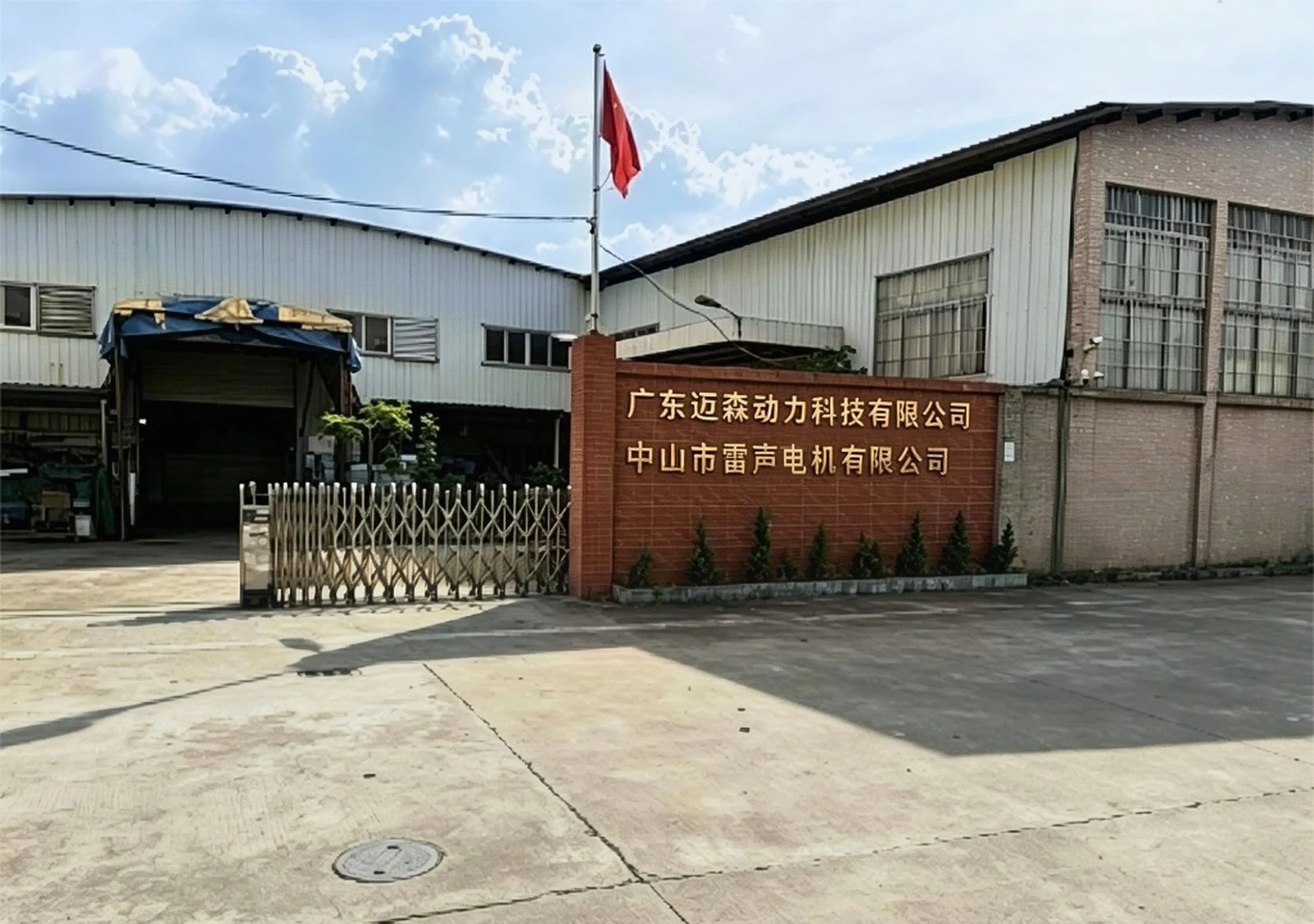
If a motor is going into a location where flammable gas, vapour or combustible dust can be present, the first question is not voltage or torque. It is which hazardous-area classification applies and which certificate the finished equipment will need. A sealed, brushless motor with a good IP rating can still be the wrong part: sealing against water and dust is not the same as protection against igniting an explosive atmosphere, and an uncertified motor in a classified zone can stop a project at the inspection stage.
This note is for OEM engineers and project buyers specifying BLDC motors or actuators for chemical processing, oil and gas, mining, coatings, grain handling and similar sites. It explains the classification terms you will see, compares the common explosion-protection types, and sets out what has to be decided before a motor supplier can quote.
Our position, stated plainly: MYSUN POWER does not currently hold ATEX or IECEx certificates, and we do not supply motors certified for use inside Zone 0/1/2 or Zone 20/21/22 areas. What we can do is review your project against the area classification and standard you give us, and tell you whether a MYSUN motor can be used (for example, outside the classified area, or as a component that your certified equipment supplier will assess) or whether you need a certified explosion-protected motor from an approved manufacturer.
Area classification in brief
Hazardous areas are classified by how often an explosive atmosphere is expected to be present. Under the IEC / ATEX zone system (area classification per IEC 60079-10-1 for gas and IEC 60079-10-2 for dust):
| Atmosphere | Zone | Explosive atmosphere present | Equipment protection level (EPL) | ATEX equipment category |
|---|---|---|---|---|
| Gas / vapour | Zone 0 | Continuously or for long periods | Ga | 1G |
| Gas / vapour | Zone 1 | Likely in normal operation, occasionally | Gb (or Ga) | 2G |
| Gas / vapour | Zone 2 | Not likely in normal operation; if it occurs, only briefly | Gc (or Gb, Ga) | 3G |
| Dust | Zone 20 | Continuously or for long periods | Da | 1D |
| Dust | Zone 21 | Likely in normal operation, occasionally | Db (or Da) | 2D |
| Dust | Zone 22 | Not likely in normal operation; if it occurs, only briefly | Dc (or Db, Da) | 3D |
Two further parameters narrow the choice: the gas or dust group (IIA, IIB, IIC for gases; IIIA, IIIB, IIIC for dusts) and the temperature class for gases (T1 450 °C down to T6 85 °C maximum surface temperature) or a stated maximum surface temperature for dusts. In North America, sites may use the Class / Division system or the Zone system under the NEC instead, and the certificate has to match whichever system the site uses.
The classification is set by the site owner or their safety engineer, not by the motor supplier. If you do not yet have it in writing, that is the first document to obtain.
Common explosion-protection types for motors
The table is general engineering orientation, based on the IEC 60079 series. It is not a statement of MYSUN capability. Which concept is allowed depends on the zone, group and temperature class, and must be confirmed by the certifying body.
| Protection type | Code / standard | Principle | Typical motor use | Points that affect a BLDC design |
|---|---|---|---|---|
| Flameproof enclosure | Ex d, IEC 60079-1 | Enclosure contains an internal explosion and prevents flame passing out through the joints | Gas zones 1 and 2 | Heavy enclosure, controlled flamepath gaps on shaft and joints, certified cable entries; heat has a harder path out |
| Increased safety | Ex e (eb / ec), IEC 60079-7 | Extra measures against arcs, sparks and hot surfaces in normal operation | Gas zones 1 (eb) and 2 (ec), mainly induction motors | Temperature limits must hold in all operating states, including stall and inverter supply |
| Pressurization | Ex p, IEC 60079-2 | Enclosure kept at positive pressure with clean air or inert gas | Large machines and cabinets | Needs purge system and monitoring; more of a system than a motor solution |
| Encapsulation | Ex m, IEC 60079-18 | Parts that could ignite are enclosed in a compound | Small components, sensors, some electronics | Encapsulation for moisture protection is not automatically Ex m; compound, thickness and temperature are certified |
| Intrinsic safety | Ex i, IEC 60079-11 | Energy in the circuit limited below ignition level | Sensors and signal circuits | Not practical for motor power circuits; relevant to encoders and temperature sensors |
| Dust protection by enclosure | Ex t, IEC 60079-31 | Enclosure keeps dust out and limits surface temperature | Dust zones 21 and 22 | Dust-tight sealing plus a certified maximum surface temperature |
Every type also has to meet the general requirements of IEC 60079-0. Under ATEX, equipment for Category 1 and 2 additionally needs the manufacturer's production quality to be assessed by a notified body; under IECEx, certification is issued by an IECEx certification body together with a quality assessment report. This is why a certificate belongs to a specific manufacturer and a specific design.
What a sealed brushless motor does and does not solve
- No brushes is helpful, not sufficient. A BLDC motor removes commutator sparking, but hot surfaces, bearing failure, electronics and cable entries remain possible ignition sources, and they are what the certification assesses.
- IP rating is about ingress. An IP rating describes protection against solids and water. It is a separate question from explosion protection, although dust zones need both.
- The drive counts. A BLDC motor runs from an electronic controller. Where the controller sits (inside or outside the classified area) and how it affects winding and surface temperature are part of the assessment. Plan the controller location early.
- Sealing and potting choices still matter. In corrosive or wet locations that are not classified, enclosure sealing (dust seals, O-rings, potted housings) and IP verification are the right tools; see our note on BMC plastic-encapsulated BLDC motors and the plastic encapsulated motor range.
Decision path before you ask for a quote
- Get the classification in writing: zone, gas or dust group, temperature class or maximum surface temperature, and whether the site uses ATEX, IECEx, or North American Class / Division or Zone rules.
- Decide where the motor will sit. If it can be placed outside the classified area (with a shaft, linkage or duct crossing the boundary in a way your safety engineer accepts), a non-Ex motor may be usable. If it must sit inside, it needs a certificate that matches the zone.
- Decide who holds the certificate. Either buy a motor already certified by its manufacturer for that zone, or have your own certified equipment supplier assess the motor as part of their equipment. The motor maker cannot self-declare a Zone 1 or Zone 21 motor.
- Decide the controller location and the cable route across the boundary.
- Then specify the motor: torque-speed, supply voltage, duty cycle, ambient range, mounting and feedback.
Where MYSUN POWER fits
We develop custom BLDC and AC motors, including high-torque geared motors for applications at 50Nm and above. For projects that touch hazardous areas we can:
- review your area classification and standard requirement and tell you honestly whether the project is feasible with a MYSUN motor;
- supply motors for the non-classified parts of the equipment, with shaft, mounting, winding, insulation class, cooling method, encoder, brake and coating options set by your specification;
- provide the factory data your certified equipment supplier will ask for: production motors undergo 100% Hi-Pot dielectric withstand testing, and samples and prototypes undergo dynamometer verification, and test reports and efficiency curves are provided for confirmed configurations;
- work under our ISO 9001 certified quality management system.
Our existing certification is Intertek cETLus component recognition (Control No. 5020003, tested to UL 1004-1, UL 1004-3 and CSA C22.2 No. 100) for selected AC induction motor models (X9674-115.2, X9674-115.2-AL, X1441-115.2, X1441-115.2-AL). It is a general North American motor safety recognition, not a hazardous-location approval. Details are on our about page.
Send your area classification for a feasibility review
Include the zone (or Class / Division), gas or dust group, temperature class, the standard or directive your site requires, where the motor and controller will sit, and the duty cycle. We will tell you whether a MYSUN motor fits, and if it does not, say so.
Submit area classification & standard for feasibility review →
Have an equipment layout or motor envelope drawing? Use the separate drawing channel: Upload drawing for review.
Need our specification template? Request the Custom Motor Design Form.
Related Engineering Guides
Ready to Optimize Your Motor Performance & Lower TCO?
Guangdong MYSUN Power Technology Co., Ltd. delivers customized BLDC, AC, and high-torque geared motor solutions tailored to your thermal, mechanical, and efficiency specs. Engineering proposals in 14–30 days; prototype batches (3–5 units) and production timelines confirmed following engineering review.