
The Technical Buyer’s Guide: Reducing Total Cost of Ownership (TCO) in Industrial BLDC Motor Procurement
A TCO worksheet for industrial BLDC motor buyers: cost formulas, an efficiency-to-energy example, and incoming checks for magnets, bearings and insulation.
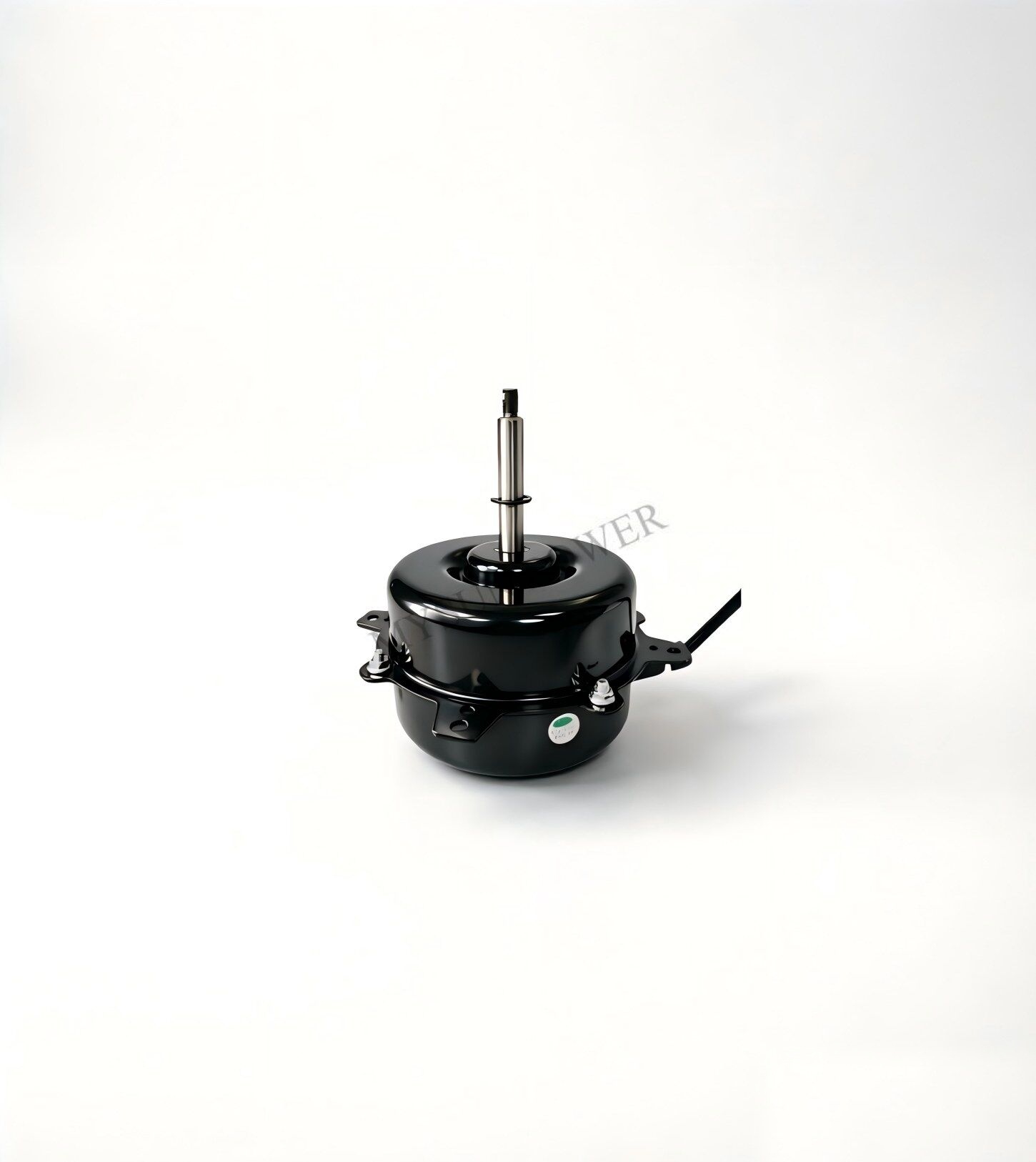
Two BLDC motor quotations can differ by a visible amount on unit price and still tell you very little about what each motor will cost over the life of the equipment. The cheaper part may need an adapter, a second sample round, a larger controller, or more field service. The more expensive one may come with test records that shorten your incoming inspection. Neither is obvious from the price column.
This guide is for procurement managers and R&D engineers who need to compare industrial BLDC motor suppliers on total cost of ownership (TCO) rather than piece price. It gives a cost breakdown with formulas, a short arithmetic example, a list of incoming-inspection checks that expose where a low quote saved money, and the inputs a supplier needs to build a like-for-like comparison.
What goes into motor TCO
TCO is the sum of what you pay to buy, integrate, run, maintain and stock a motor over the period you care about. We do not publish a generic split such as "energy is X% of lifetime cost": the share of each item depends on running hours, power level, electricity tariff, service model and annual volume, and it changes a lot between a fan that runs around the clock and an actuator that moves a few times an hour. Use the table with your own figures.
| Cost item | Formula (per year unless noted) | Inputs you need | Where the figure should come from |
|---|---|---|---|
| Acquisition | Unit price × annual volume (+ tooling or NRE, one-time) | Quoted price at your volume; any tooling or engineering charge | Supplier quotation |
| Energy | (Shaft output power ÷ motor efficiency at duty point) × operating hours × electricity tariff | Shaft power and efficiency at the duty point, hours per year, tariff | Dynamometer data at your duty point, your duty cycle, your tariff |
| Integration and rework | (Engineering hours × hourly rate) + adapter / bracket BOM + re-test cost (one-time) | Hours to adapt the unit, extra parts, extra validation runs | Your engineering estimate per option |
| Maintenance | Service events per year × (labour + parts + travel) per event | Expected service interval, cost per visit | Your service records, supplier life estimate for the duty |
| Downtime | Failures per year × hours to restore × cost per hour of stopped equipment | Failure expectation, repair time, cost of the stopped process | Your field data; the end user's cost of downtime |
| Inventory and SKU count | Number of motor SKUs × safety stock per SKU × unit cost × carrying-cost rate | SKUs needed to cover your product range, safety stock policy, carrying rate | Your planning and finance teams |
| Incoming inspection and quality | Inspection hours per lot × lots per year × rate + cost of rejected lots | Inspection plan, reject history | Your quality team; supplier test records reduce this line |
| Compliance | Cost of certifying or re-certifying the end equipment with this motor (one-time per design) | Whether the motor's existing certification covers your configuration | Supplier certificate scope and your test house |
Total over N years = one-time items + N × (sum of annual items). If your finance team discounts future costs, apply the same discount rate to both suppliers. All values must be verified against the project's duty cycle and annual volume.
A short arithmetic example: what one point of efficiency is worth
Efficiency is the line most often argued and least often measured at the right point. The arithmetic below uses illustrative inputs, not measured data, to show how to convert an efficiency difference into energy:
- Shaft output 500 W at the duty point, 4,000 operating hours per year.
- Motor A at 85% efficiency draws 500 ÷ 0.85 ≈ 588 W. Motor B at 86% draws 500 ÷ 0.86 ≈ 581 W.
- Difference ≈ 7 W × 4,000 h ≈ 27 kWh per motor per year. Multiply by your tariff, your fleet size and the years in service.
Two cautions. The efficiency must be the value at your duty point, not the peak value on a datasheet; a motor that peaks high but sits at your operating point far from that peak can lose to a "less efficient" one. And for low-hour applications the energy line may be small, and integration, inspection or SKU count will decide the comparison instead.
Where a low quote usually saves money, and how to check it at incoming inspection
Price differences between BLDC suppliers come from somewhere. The useful response is not to assume the cheaper part is bad, but to check the specific items where cost is typically taken out. The table turns those items into checks your quality team can run or request.
| Where cost can be removed | What it does to TCO if wrong | How to check it | What to ask the supplier for |
|---|---|---|---|
| Magnet grade and temperature rating | Torque loss after heat exposure; higher current for the same output | Measure back-EMF or torque constant at room temperature, run a heat soak at the maximum application temperature, measure again and compare | Magnet grade and maximum working temperature in the motor specification |
| Bearings and grease | Noise, axial play and early bearing wear | Spin and listen, measure axial play, check bearing marking against the specification | Bearing brand / series, seal type and grease named in the specification |
| Winding insulation and varnish | Insulation breakdown under PWM drive, especially in humid installations | Hi-Pot and insulation-resistance test at receiving; visual check of varnish coverage on a sectioned or sacrificial sample | Insulation class and the supplier's Hi-Pot test record |
| Winding consistency | Unit-to-unit spread in current and temperature; controller tuning issues | Phase-to-phase resistance balance, no-load current and no-load speed against the agreed limits | Agreed acceptance limits and the supplier's end-of-line test data |
| Shaft and flange machining | Misalignment, coupling wear, bearing load | Shaft diameter, keyway and runout with gauges and a dial indicator against your drawing | Drawing with tolerances, and first-article inspection report |
| Sealing | Moisture and dust ingress, corrosion | Visual check of seals and O-rings; IP verification per your mechanical specification | Sealing method and how the IP rating is verified for your configuration |
Acceptance limits for each check belong in your purchase specification. Without them, "passed" on a supplier report has no defined meaning.
Why buying from the manufacturer changes the TCO lines, and where it does not
Buying directly from the factory that winds and tests the motor does not make a motor better on its own. What it changes is who you talk to and what records you can get:
- Integration and rework: shaft, flange and winding changes are discussed with the engineers who make them, which shortens the loop between a drawing change and a revised sample.
- Inspection: you can ask for the end-of-line test data and agree acceptance limits with the production side instead of relying on a distributor's certificate of conformity.
- SKU count: a manufacturer can sometimes merge variants into one design (for example, covering two mounting options with one housing), which reduces safety stock. Whether that works depends on your range.
What it does not remove is the need to specify the duty properly and to test the prototype in your unit.
What MYSUN POWER can provide for a TCO comparison
Guangdong MYSUN Power Technology Co., Ltd. manufactures custom brushless DC motors, AC motors and high-torque geared motors, with an approximate annual manufacturing capacity of 600,000 motor units. The facts below are the ones published on our about and support pages:
- Every production motor undergoes Hi-Pot dielectric withstand testing, and dynamometer load testing is performed on samples and prototypes. Test reports and efficiency curves are provided for confirmed configurations, which gives you the duty-point efficiency the energy line needs.
- Manufacturing operates under an ISO 9001 certified quality management system.
- Selected AC induction motor models (X9674-115.2, X9674-115.2-AL, X1441-115.2, X1441-115.2-AL) hold Intertek cETLus component recognition, Control No. 5020003, tested to UL 1004-1, UL 1004-3 and CSA C22.2 No. 100. For custom BLDC configurations and for your end equipment, certification applicability is confirmed during project review, so plan the compliance line accordingly.
- Engineering proposal typically in about 14 days with common materials, up to about 30 days with non-standard materials; prototype time confirmed after review.
- Initial prototype batch of 3–5 units for validation; production MOQ from 300 units.
Our strongest cost range is 100W–1kW. Outside that range we will still review the project, but expect the comparison to be closer.
Get a TCO comparison for your project
Send your annual volume, duty cycle (hours per year and the main operating point), supply voltage and the motor you use today. We will return a quotation with the test data needed to fill in the table above.
Submit annual volume & duty cycle for TCO comparison →
Comparing against an existing motor drawing? Use the separate drawing channel: Upload drawing for review.
Need specifications first? Request the DC Motor Technical Catalog.
More procurement notes: Supply Chain & Selection articles.
Ready to Optimize Your Motor Performance & Lower TCO?
Guangdong MYSUN Power Technology Co., Ltd. delivers customized BLDC, AC, and high-torque geared motor solutions tailored to your thermal, mechanical, and efficiency specs. Engineering proposals in 14–30 days; prototype batches (3–5 units) and production timelines confirmed following engineering review.