Stop Buying from Catalogs: Why a "Matching Analysis Report" is the New Standard in Industrial Motor Procurement
A technical overview of how matching analysis reports support motor procurement decisions, including specification alignment, supply chain risk reduction and total cost evaluation.
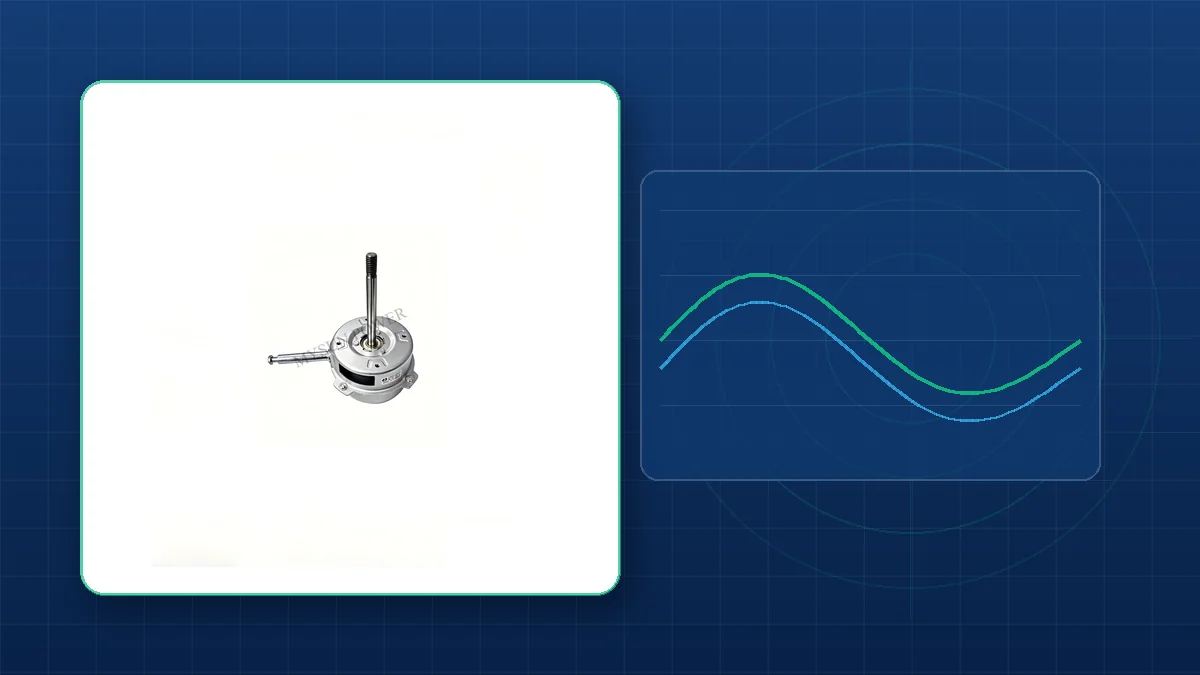
For decades, the standard operating procedure for industrial procurement has been ruthlessly simple: gather three quotes, compare the specification sheets, and select the lowest bidder. While this strategy works perfectly for sourcing office supplies or passive raw materials, applying it to dynamic core components like Brushless DC (BLDC) motors is a high-risk gamble.
Today’s commercial HVAC systems and industrial ventilation equipment operate under extreme, variable conditions. Buying a motor based on a static spec sheet is no longer enough. The new standard for securing a reliable supply chain is the Matching Analysis Report.
The Trap of the Static Spec Sheet
A standard spec sheet tells a dangerous half-truth. It displays peak torque, rated RPM, and theoretical efficiency under perfect, laboratory conditions. However, your equipment does not operate in a lab.
When a procurement director buys a motor solely because it matches the requested "50Nm torque" on paper at a lower price, they often ignore the dynamic realities of integration:
How does the motor's thermal derating curve behave under your system's specific ambient temperature?
Will the motor's inductance cause resonance issues with your proprietary controller?
Can the internal bearings and shaft sustain the exact radial and axial loads generated by your customized fan impeller or propeller?
When these questions are left unanswered, the savings achieved on the BOM (Bill of Materials) are rapidly obliterated by R&D delays, excessive electro-mechanical tuning, and worst of all, catastrophic field failures.
What is a Matching Analysis Report?
At MYSUN POWER, we believe that an unverified motor is a liability. Before we discuss unit pricing, our engineering team collaborates with your R&D department to generate a comprehensive Matching Analysis Report.
This is not a sales brochure; it is a rigorous engineering document. It bridges the gap between our motor's capabilities and your system's exact requirements. A standard report includes:
Load Profile Simulation: We map the motor’s performance curves directly against your system’s specific duty cycles, ensuring optimal efficiency across your actual operating range.
Controller Compatibility Verification: We analyze the Back-EMF waveforms and inductance parameters to help ensure reliable handshakes with your drive logic, eliminating the risk of step-loss or control instability.
Thermal and Structural Assessment: We evaluate heat dissipation under your specific environmental constraints (e.g., enclosed rooftop heat for HVAC) to help ensure long-term reliability.
Reshaping Procurement Strategy
Forward-thinking procurement leaders understand that their real job is not just cutting initial costs, but protecting the company from risk.
By demanding a Matching Analysis Report from your supplier, you shift the procurement conversation from a race to the bottom on price, to a strategic alignment on system reliability. You stop buying isolated hardware and start investing in verified system performance.
One prevented product recall or one eliminated redesign cycle often outweighs the unit price difference of an application-matched motor.
It is time to elevate your sourcing standards. Stop buying off the shelf, and start demanding the data that proves it works.
Ready to Optimize Your Motor Performance & Lower TCO?
Guangdong MYSUN Power Technology Co., Ltd. delivers customized BLDC, AC, and high-torque geared motor solutions tailored to your thermal, mechanical, and efficiency specs. Engineering proposals in 14–30 days; prototype batches (3–5 units) and production timelines confirmed following engineering review.