
Demystifying Commercial HVAC Efficiency: Why Application-Matched BLDC Integration Beats Off-the-Shelf Solutions
Commercial HVAC systems demand peak efficiency under variable loads. Discover why standard catalog motors often add extra adapter and retrofit costs in data centers, and how application-matched BLDC integration helps lower total cost of ownership.
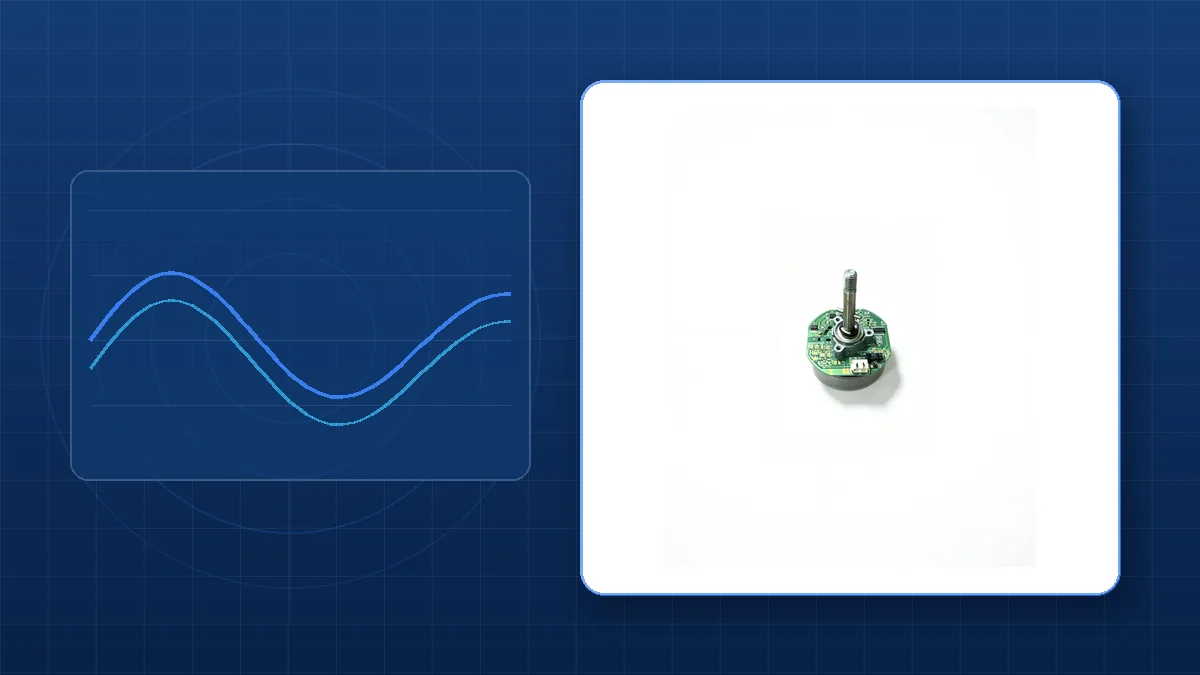
In the era of smart buildings and high-density data centers, the demand for HVAC (Heating, Ventilation, and Air Conditioning) efficiency has moved from a secondary operational concern to a primary strategic priority. As commercial facilities strive for higher SEER/APF ratings and lower PUE (Power Usage Effectiveness), the powertrain within the airflow system—the BLDC motor—is under the spotlight.
However, a fundamental engineering gap persists. Many system designers still rely on Standard Product Catalogs. In complex commercial environments, this "convenience" often introduces hidden overheads: extra adapter brackets, custom mounting plates, and requoting cycles.
The Variable Load Challenge in Commercial HVAC
Unlike industrial fans that often run at constant speeds, commercial HVAC systems (such as VAV units, VRF systems, and precision cooling for data centers) operate under highly dynamic conditions. A typical commercial motor rarely runs at 100% load; instead, it spends 70% of its life operating at 30-50% capacity.
This is where catalog motors fail. Most off-the-shelf BLDC motors are optimized for a single, full-load peak efficiency point. When the system dials down during low-occupancy hours or reduced server activity, the catalog motor’s efficiency curve drops sharply. The result? Massive cumulative energy waste that standard specifications never account for.
Data Centers: The High-Stakes Frontier
For data center operators, energy waste isn't just a cost—it’s lost capacity. Cooling typically accounts for 33% to 40% of a data center's total energy budget.
When a standard catalog motor is used in a CRAC (Computer Room Air Conditioning) unit, misalignments with the controller's switching frequency or the fan's specific aerodynamic curve can lead to added electromagnetic losses and harmonic distortion. By shifting to an application-matched motor integration, engineers can tailor the winding profile to achieve a broader, flatter efficiency curve across variable partial loads. This optimized motor sizing helps lower ongoing facility power consumption without over-specifying frame sizes.
Beyond Unit Cost: Quantifying TCO Reduction
The true cost of an HVAC motor is its Total Cost of Ownership (TCO). While a catalog motor may have a lower initial purchase price, unforeseen integration costs frequently manifest through:
1. Partial Load Penalties: Continuous energy loss during off-peak hours.
2. Integration Friction: The need for external filters, signal converters, or custom mounting to make the standard motor "fit."
3. NVH Violations: Excessive noise and vibration in commercial offices or hotels due to electromagnetic resonance with the building’s structure.
By eliminating these factors through deep technical matching, we move the focus from "Component Sales" to "System Optimization."
The 6-Field Integration Blueprint
At MYSUN POWER, our custom integration process focuses on aligning the motor winding, thermal envelope, and mechanical mount with the equipment's actual boundary conditions. To achieve this, our engineering team synchronizes data across six core parameters:
- Electrical Boundaries: Real-time bus voltage fluctuation and inverter switching frequencies.
- Control Protocols: Seamless alignment with BACnet, Modbus, or specific PWM signals for BMS integration.
- Torque-Speed Matrix: Optimization for the entire variable load curve, not just the peak.
- Mechanical Interface: Precision shaft/housing tolerances to eliminate structural vibration.
- Acoustic Targets (NVH): Minimizing electromagnetic hum in sensitive commercial environments.
- Environmental/Thermal Limits: Custom dissipation paths for ceiling plenums or high-density server aisles.
Conclusion: Engineering for the Bottom Line
Standard catalogs are designed for the masses; commercial HVAC systems are designed for performance. To truly optimize a commercial building's energy footprint, motor selection should reflect the full operating envelope rather than a single catalogue point.
By adopting application-matched BLDC motor integration, commercial HVAC OEMs and facility operators can minimize adapter and retrofit overhead, improve energy performance across operating hours, and maintain a competitive total cost of ownership.
Related Engineering Guides
Ready to Optimize Your Motor Performance & Lower TCO?
Guangdong MYSUN Power Technology Co., Ltd. delivers customized BLDC, AC, and high-torque geared motor solutions tailored to your thermal, mechanical, and efficiency specs. Engineering proposals in 14–30 days; prototype batches (3–5 units) and production timelines confirmed following engineering review.