
Standard Catalog vs. Custom BLDC Motors: Procurement Decision Guide
Decide whether a catalog BLDC motor is enough or a custom build is justified: comparison matrix on envelope, thermal margin, lead time, and prototype costs.
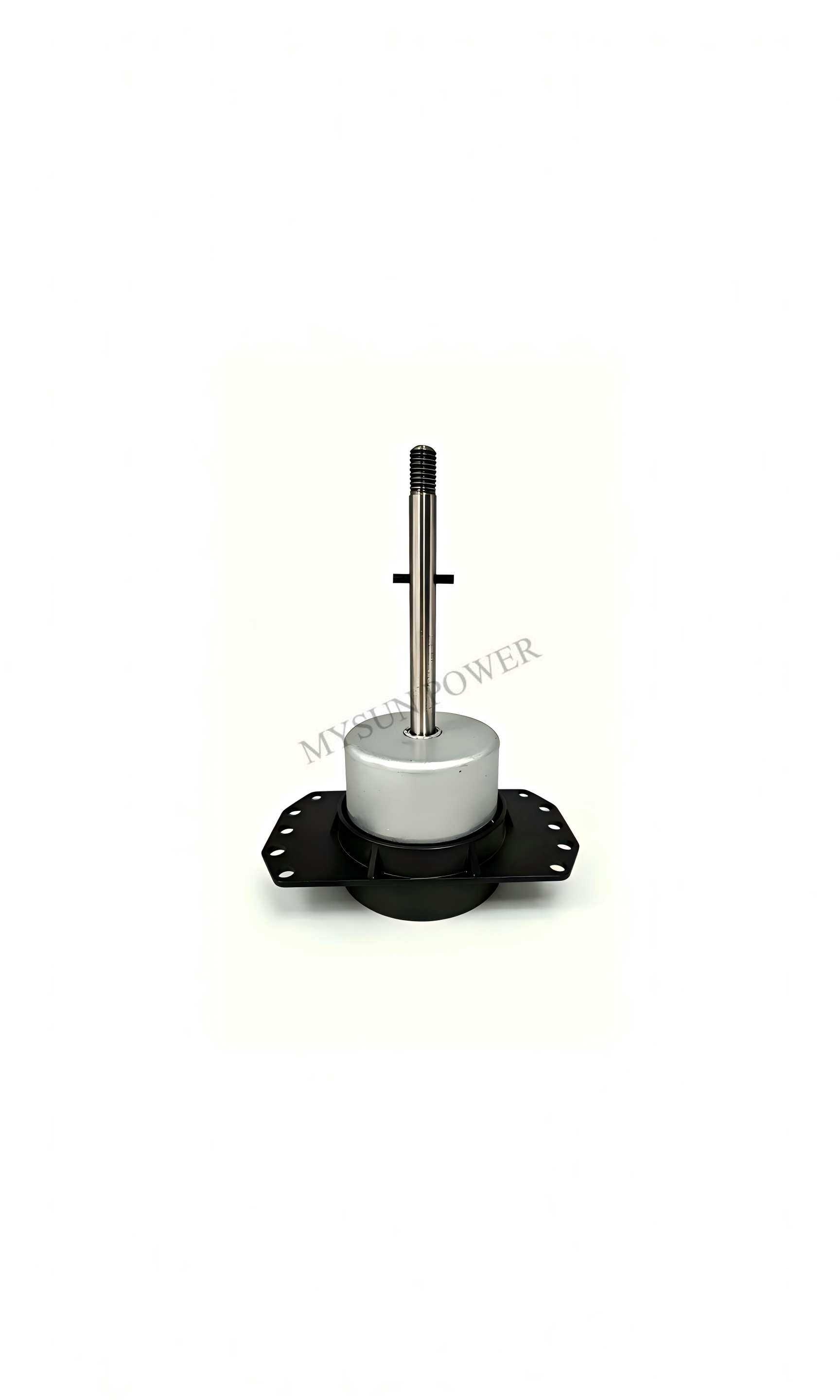
When sizing a brushless DC (BLDC) motor for an OEM machine or commercial equipment build, sourcing teams face a classic tradeoff: buy an off-the-shelf standard catalog motor or commission a custom-engineered motor assembly.
Catalog motors look attractive on initial quotations: published datasheets, transparent distributor pricing, and immediate availability for bench experiments. The friction begins when the motor moves into pilot production and real operating conditions. Sourcing engineers discover that catalog nominal ratings were established under open-bench airflow that does not exist inside their equipment housing; the standard cylindrical shaft requires an external coupling or machined sleeve to mate with the driven load; the motor runs hotter than expected because continuous machine duty lands far from its peak efficiency zone; or volume production delivery stretches unexpectedly.
Fitting a catalog motor into an application with specific thermal, mechanical, or duty-cycle boundaries often leads to repeated prototype rework, unplanned adapter costs, and delayed product releases. This guide provides a procurement framework for evaluating standard catalog motors against custom BLDC solutions, outlines when a standard catalog motor is genuinely the right engineering choice, presents a procurement decision matrix, and details what operational data to supply before ordering prototypes.
When a Standard Catalog Motor Is Enough
Standard catalog motors are built for general-purpose industrial duty across broad operating conditions. When an application fits comfortably within the manufacturer nominal ratings, buying an off-the-shelf catalog motor is the most practical and economical decision.
A standard catalog motor is typically sufficient when:
- Mechanical space is unconstrained: The equipment enclosure has ample internal clearance. Standard metric IEC or standard industrial mounting flanges, standard cylindrical shaft diameters, and standard cable exits fit directly without custom brackets or geometric modifications.
- Operating conditions are benign: The motor runs in standard ambient temperatures (-10°C to +40°C), dry indoor conditions, and clean air where standard ingress protection (such as IP40 or basic dust seals) is adequate.
- Duty cycle stays near the rated point: The load matches published nominal speed and torque ratings, operating continuously in the motor peak efficiency band without severe cyclic overloads or high-inertia start-up spikes.
- Production volume is low: For machines built in quantities below custom manufacturing thresholds (such as annual volumes under 300 units), catalog components sourced through distributors eliminate custom tooling and non-recurring engineering charges.
- Testing early proof-of-concept: During early development, catalog units allow firmware developers to test communication protocols and basic kinematics before final equipment dimensions are frozen.
The Hidden Engineering Costs of Forcing a Catalog Fit
When an application deviates from standard catalog test conditions, adapting a catalog motor introduces compounding technical compromises:
- Operating Point and Winding Mismatch: A catalog BLDC motor is wound for a specific voltage and rated point. If your machine operates at lower speeds with higher continuous torque, a catalog motor draws excess phase current. Because winding resistive heating scales with the square of current (I2R), operating away from the motor design point generates disproportionate internal heat rise.
- Thermal Margins in Confined Enclosures: Datasheet temperature ratings are measured on open test benches with unrestricted airflow. Installed inside an unventilated housing, near compressors, or beside power electronics, heat cannot escape easily. Without dedicated conductive mounting, housing fin geometry, or upgraded insulation classes, winding temperatures rise quickly, accelerating insulation aging and risking rotor magnet demagnetization.
- Mechanical Interface Complications: Driven loads—such as direct-drive blowers, pumps, or gearboxes—often require specific shaft flats, keyways, D-cuts, or pilot flanges. Sourcing a catalog motor with generic shaft dimensions necessitates external couplings, spacer plates, or shaft sleeves. Every additional interface part introduces tolerance stack-up, increases runout, adds axial length, and imposes unplanned radial loads on motor bearings.
- High Breakaway Torque Demands: High-inertia loads (such as heavy commercial fan impellers or loaded positive-displacement pumps) require substantial breakaway torque at zero speed. Because catalog datasheets emphasize continuous rated torque rather than locked-rotor limits, drive controllers may trip on overcurrent during start-up. Sizing up to a larger catalog frame solely to survive start-up leaves the motor underloaded, inefficient, and physically oversized during continuous running.
- Ingress Protection and Sealing Limits: Standard catalog motors typically carry fixed ingress protection ratings and standard lead wires. Retrofitting secondary shaft seals, O-rings, potted electronics, or IP-rated connectors to a stock motor after delivery is labor-intensive and prone to seal failures in humid, condensing, or dusty environments.
Sourcing Decision Matrix: Standard Catalog vs. Custom BLDC Motor
Use the table below during technical design reviews to evaluate whether an off-the-shelf catalog motor is sufficient or a custom motor build is justified.
| Review Parameter | When a Standard Catalog Motor Is Enough | When a Custom Motor Build Is Justified | What the OEM Must Define in the Review |
|---|---|---|---|
| Mechanical Envelope | Ample clearance; standard IEC flanges and cylindrical shaft fit directly. | Restricted geometry, low-profile packaging, or integrated pilots/custom shafts required. | Maximum envelope (OD × Length), mounting face CAD drawing, pilot diameter, bolt circle. |
| Shaft & Bearing Loads | Standard shaft driving inline load; standard bearing ratings suffice. | Custom shaft length, specific D-cut, pinion gear interface, or high radial/thrust loads. | Shaft drawing, allowable runout, expected radial/axial loads, bearing life target. |
| Operating Point & Winding | Continuous run at catalog rated speed/torque under nominal DC voltage. | Non-catalog speed-to-torque ratio where standard windings draw excessive current. | Continuous RPM and torque, DC bus voltage with tolerance, max phase current. |
| Start-Up & Breakaway Torque | Start-up demand stays within the drive’s current limit and does not require oversizing the frame. | High-inertia load requiring high breakaway torque without controller tripping or frame oversizing. | Reflected load inertia, breakaway torque requirement, controller current limit. |
| Thermal Margin & Environment | Well-ventilated ambient (-10°C to +40°C) matching open-bench catalog test conditions. | Confined unventilated enclosures, ambient above +40°C, or severe duty cycles needing Class F/H insulation. | Ambient temperature range, enclosure volume, airflow conditions, duty cycle, insulation class. |
| Ingress Protection (IP) | Clean, dry indoor machinery requiring standard IP40 or basic dust seals. | Outdoor, condensing, humid, or dusty environments requiring verified sealing (e.g. IP54, IP55, IP65). | Environmental exposure (dust, moisture, washdown) and required IP rating to verify per project. |
| Cabling & Control Interface | Standard flying leads or stock multi-pin connectors; standard Hall sensor compatibility. | Pre-terminated wire harnesses, sealed industrial connectors, integrated electronics, 0–10V/PWM, Modbus. | Cable length, wire gauge, connector part number, pinout, speed command type, alarm signals. |
| Production Volume & Sourcing | Low-volume builds (<300 units/year) or one-off pilot units sourced from catalog distributors. | Serial OEM production where unit cost, supply reliability, and labor reduction justify batch runs (MOQ from 300). | Estimated annual usage (EAU), release batch size, target landed cost, delivery schedule. |
| Sampling & Lead Time | Off-the-shelf distributor availability (days to weeks) for immediate bench evaluation. | Structured development: engineering proposal in ~14 days (standard) or ~30 days (non-standard); 3–5 prototypes. | Project development schedule, bench test milestones, required prototype quantity, production ramp date. |
| Safety & Certifications | Generic manufacturer component markings covering basic requirements. | Factory operates under an ISO 9001 certified quality management system; safety marks reviewed per project. | Target export jurisdictions (e.g. North America, EU) and specific end-equipment safety standards. |
If most rows in the second column match your machine, an off-the-shelf catalog motor is the right buy. When two or more rows require deviations, commissioning an application-matched motor prevents costly engineering rework and protects field reliability.
What an OEM Must Provide for an Engineering Review
To evaluate whether a standard motor design can be adapted or an entirely custom build is necessary, a motor manufacturer requires specific boundary conditions rather than broad equipment descriptions:
- Supply Voltage & Electrical Limits: Nominal DC bus voltage, permissible voltage fluctuations, maximum continuous current from the motor drive, and peak transient current limits.
- Duty Cycle & Operating Curve: Continuous operating speed and torque, peak torque duration, frequency of starts and stops, duty cycle classification (continuous S1, intermittent S3), and service life target.
- Mechanical Interface Drawings: Dimensional drawings of the mounting face, bolt circle diameter, pilot register, shaft diameter, tolerance specifications, keyway or flat geometry, and allowable runout.
- Inertia & Breakaway Profile: Total load inertia reflected to the motor shaft, static breakaway torque, acceleration ramp time, and deceleration profile.
- Environmental & Thermal Envelope: Minimum and maximum ambient operating temperatures, enclosure volume, available airflow velocity/direction, exposure to moisture or dust, and target IP enclosure rating.
- Control & Feedback Architecture: Speed control command type (0–10V analog, PWM frequency and duty range, or Modbus RS485), required feedback sensors (Hall effect sensors or optical encoders), and fault alarm requirements.
For a comprehensive specification worksheet covering each parameter, refer to the OEM BLDC motor customization checklist.
How MYSUN POWER Supports Custom Motor Development
Guangdong MYSUN Power Technology Co., Ltd. develops custom BLDC and AC motors for commercial HVAC and industrial OEM equipment, backed by motor-industry experience since 2010. Our most cost-competitive manufacturing range spans 100W to 1kW, and we support high-torque geared motor applications at 50Nm and above for industrial machinery. The relevant product families can be reviewed under our brushless DC motors and precision geared motors catalogs.
What you can expect from the engineering side, as stated on our about page and technical support page:
- Engineering Proposals: Delivered in approximately 14 days when common raw materials apply, and up to approximately 30 days when non-standard materials are required. Prototype production timelines are confirmed following engineering review.
- Prototype & Production Quantities: Initial prototype batches of 3 to 5 units are provided for R&D validation; production minimum order quantity (MOQ) starts from 300 units per production run.
- Customization Scope: Shaft dimensions, mounting configurations, winding specifications (precise KV and torque constant calibration), insulation class upgrades (Class B, F, or H), cooling pathways, encoders, brakes, and protective surface treatments. Sealing methods (dust seals, O-rings, potted housings) are engineered per project, with IP ratings verified against mechanical project specifications rather than assumed from a stock catalog frame.
- Quality System & Testing: Manufacturing operations run under an ISO 9001 certified quality management system. Production motors undergo Hi-Pot dielectric insulation testing, with dynamometer load verification on samples and prototypes. Detailed dynamometer test reports, torque-speed curves, and thermal rise data are supplied for confirmed OEM configurations.
- Certification Transparency: Selected AC induction motor models manufactured by our affiliated enterprise entity, Zhongshan Thunder Motor Co., Ltd. (中山市雷声电机有限公司; models X9674-115.2, X9674-115.2-AL, X1441-115.2, and X1441-115.2-AL), hold Intertek cETLus Component Recognition (Control No. 5020003, Report 21010961HKG-001) evaluated to UL 1004-1, UL 1004-3, and CSA C22.2 No. 100. Both Zhongshan Thunder Motor Co., Ltd. and Guangdong MYSUN Power Technology Co., Ltd. are affiliated companies under common ownership, sharing integrated production facilities, engineering teams, and testing labs. That recognition does not automatically extend to custom BLDC or geared configurations; certification applicability to custom motors and end equipment is confirmed during engineering project review. Please note: MYSUN POWER does not currently hold ATEX or IECEx explosion-proof certificates.
Submit Your Motor Requirements for Engineering Review
Share your target speed, continuous torque, voltage envelope, ambient conditions, and mechanical interface constraints. Our application engineering team will review your duty cycle to determine whether an existing standard frame is viable or deliver a tailored proposal matching your operational requirements.
Submit RFQ: Standard vs. Custom Motor Selection →
Already have an interface drawing, mounting footprint, or sample specifications? Use the dedicated engineering drawing channel: Upload drawings for engineering review.
Need a technical specification worksheet first? Request the Custom Motor Design Form (PDF).
Related Technical & Procurement Resources
- Motor Procurement & Selection Articles: Sourcing guides and technical notes for commercial motor procurement.
- Why Standard Catalog BLDC Motors Fail in High-Torque Geared HVAC: Case analysis examining thermal rise, gearbox fit, and breakaway torque limits.
- Industrial BLDC Motor Procurement TCO Guide: Engineering cost evaluation framework comparing upfront unit prices against lifecycle operational costs.
- OEM BLDC Motor Customization Checklist: Key Parameters: Technical worksheet detailing electrical, mechanical, and environmental specification fields.
- Related Reading:
Ready to Optimize Your Motor Performance & Lower TCO?
Guangdong MYSUN Power Technology Co., Ltd. delivers customized BLDC, AC, and high-torque geared motor solutions tailored to your thermal, mechanical, and efficiency specs. Engineering proposals in 14–30 days; prototype batches (3–5 units) and production timelines confirmed following engineering review.